Cookie settings
We use cookies to run the website securely and activate optional features like analytics and marketing only with your consent. Learn more

Automation for everyone
Automation for everyone
Austria · Warehouse automation & panel handling
BARBARIC Warehouse Automation & Panel Handling
BARBARIC (Austria) develops systems for automatic panel storage, feeding and return transport in the wood and furniture industry. From CSF panel storage to LCV feeding systems and NST nesting pickers – BARBARIC automates material flow between warehouse, saw and CNC. Asamer is an authorized BARBARIC dealer for CZ, SK and HU with installation, service and ERP integration.
- OriginMade in Austria
- Asamer roleAuthorized dealer
- MarketsCZ · SK · HU
- IntegrationInstall · Service · ERP
Panel Storage
4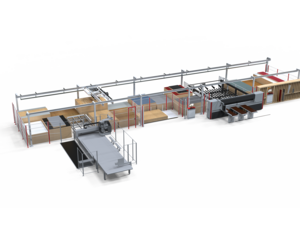
Panel Storage
CSF Professional Barbaric
- ·For trade and craft – compact & cost-effective
Panel Storage
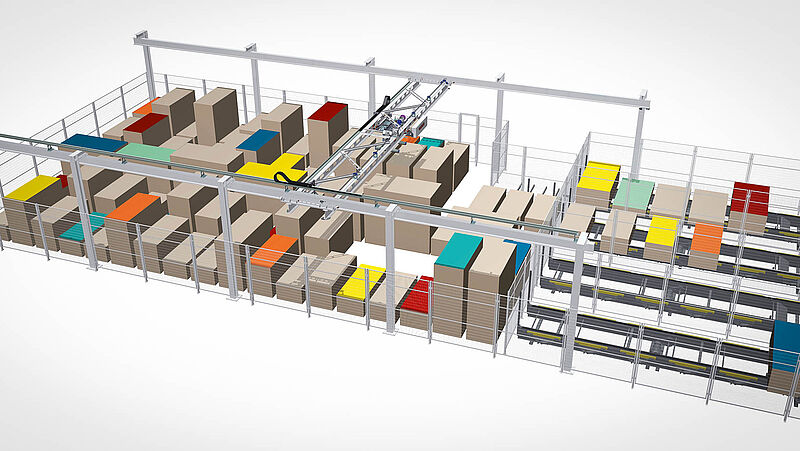
CSF Industrial Barbaric
- ·For industry – high performance
Panel Storage
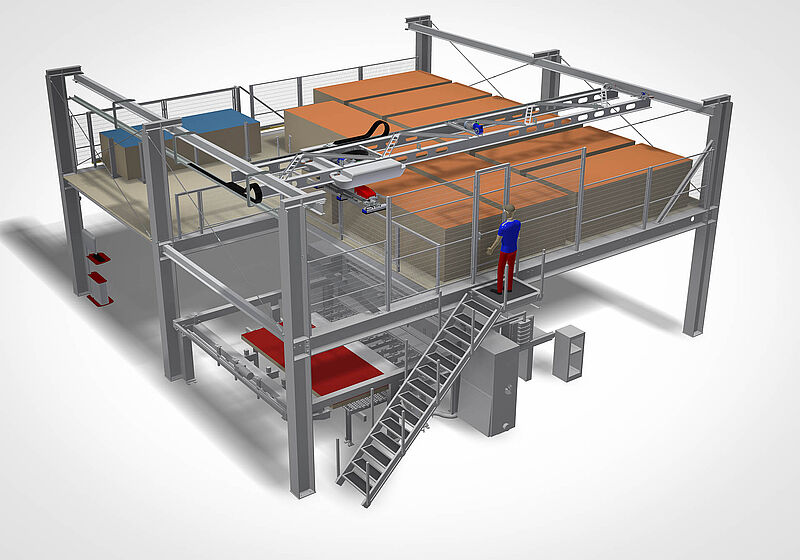
CSF Multilevel Barbaric
- ·The space-saving storage solution – multi-level
Panel Storage
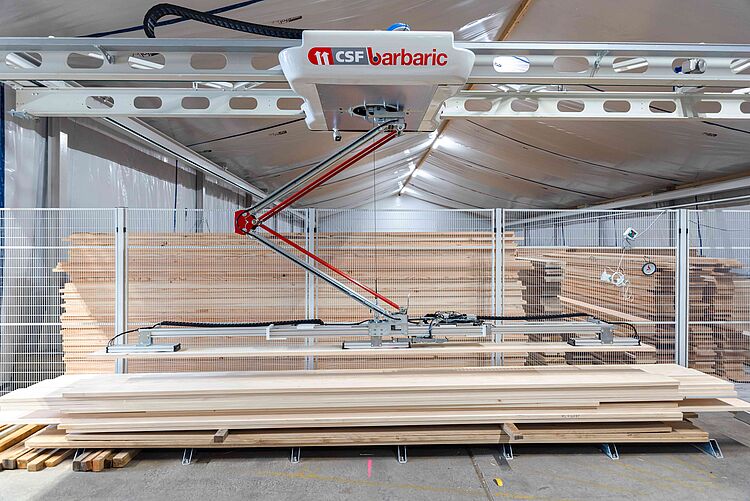
Sonderanwendungen Barbaric
- ·Custom solutions for special requirements
Feeding Systems
1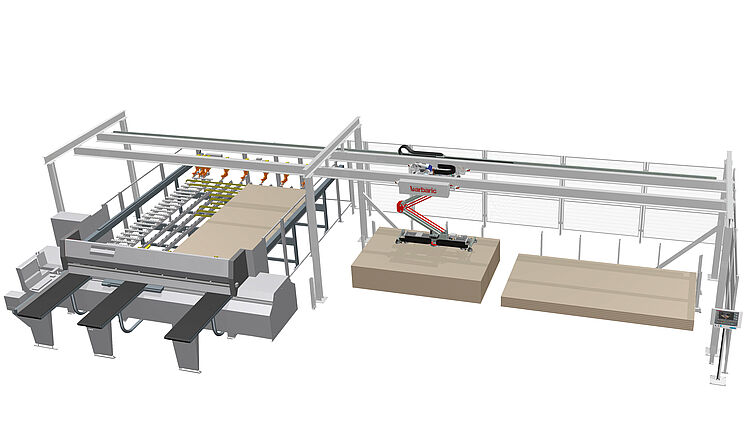
Nesting Picker
1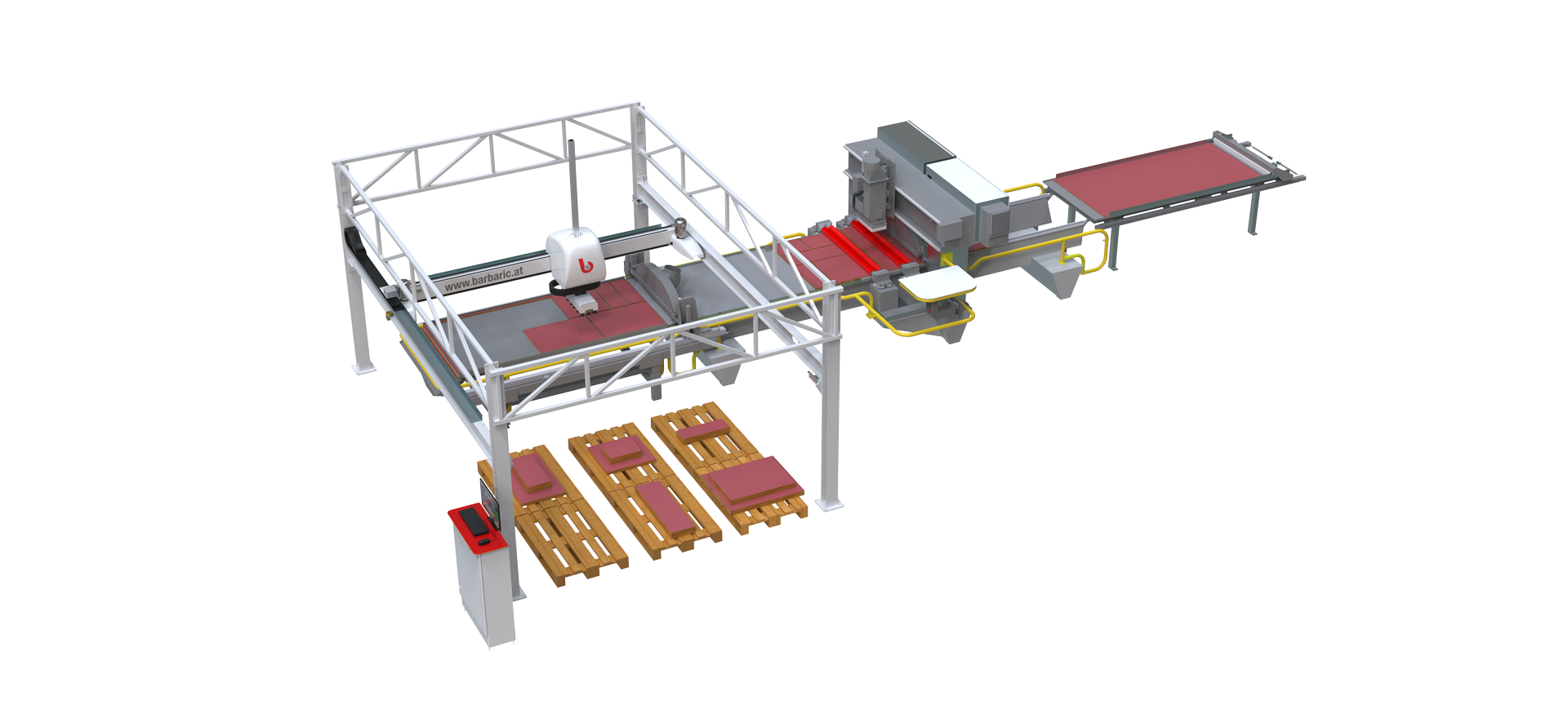
Return Systems
4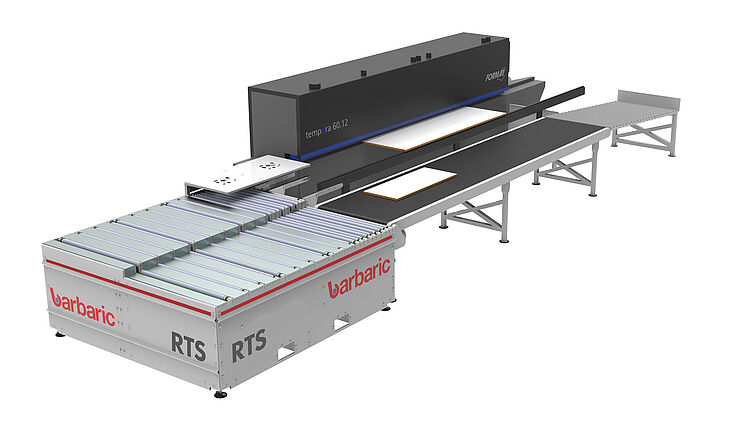
Return Systems
RTS Compact Barbaric
- ·Universal, simple, maximum benefit
Return Systems
RTS Professional Barbaric
- ·Intelligent – with and without destacking
Return Systems
RTS Industrial Barbaric
- ·Industrial – for loads up to 100 kg
Return Systems
Automatisches Teilehandling Barbaric
- ·For batch-size-1 production on throughfeed machines
Parts Buffer
1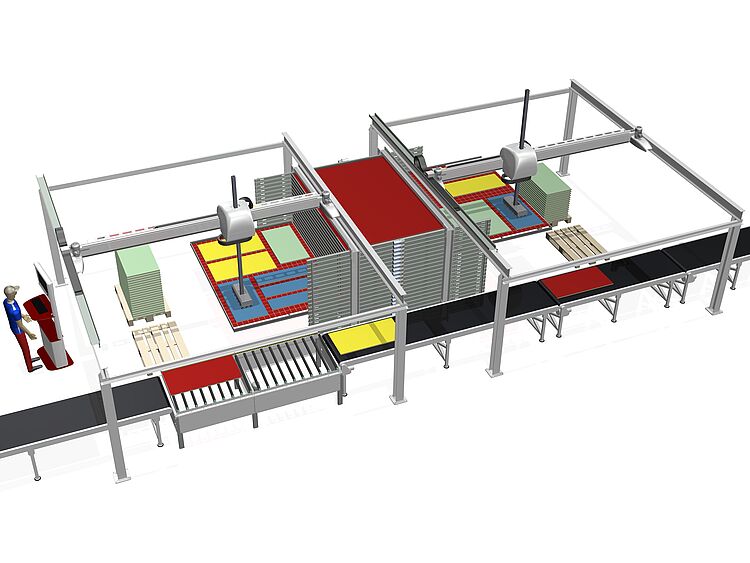
Door Handling
3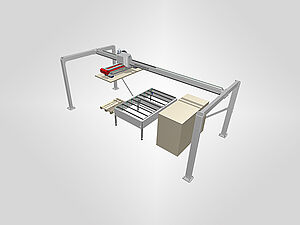
Labeling Printer
1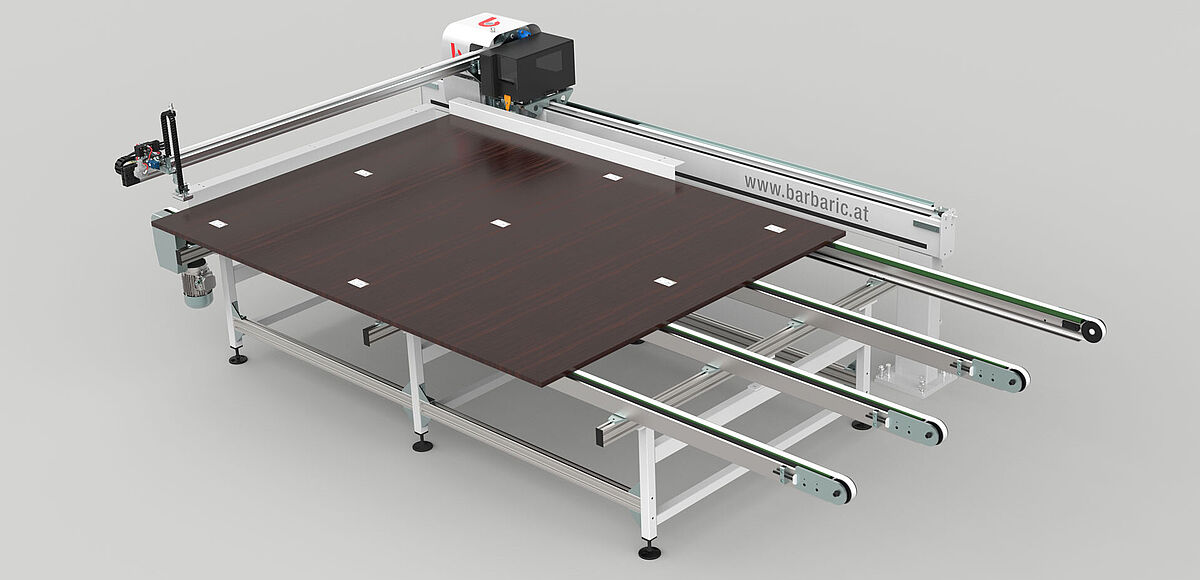
Vacuum Lifters (UniWood)
5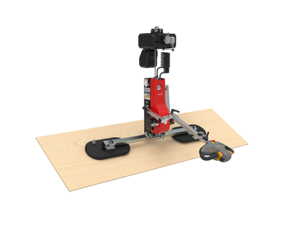
Vacuum Lifters (UniWood)
UniWood UWL 3 Barbaric
- ·Standard lifter with 90° tipping – universal for panels
Vacuum Lifters (UniWood)
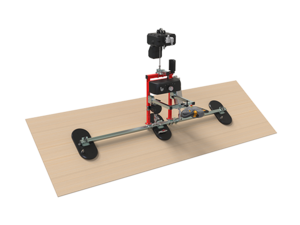
UniWood UWL 3J Barbaric
- ·Large-format panels up to 300 kg (optional 500 kg)
Vacuum Lifters (UniWood)
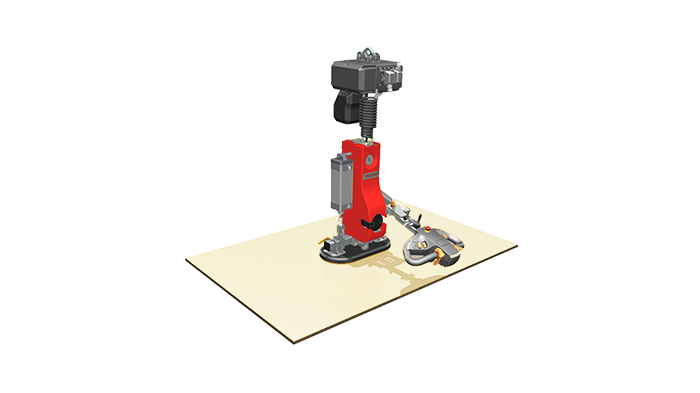
UniWood UWL 3S Barbaric
- ·Single suction cup for edge-banding machines – up to 150 kg
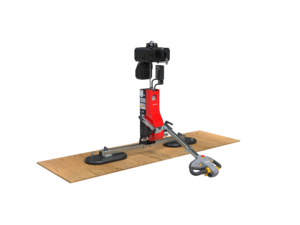
Vacuum Lifters (UniWood)
UniWood UWL 1 Barbaric
- ·Standard lifter for wood handling – without tipping
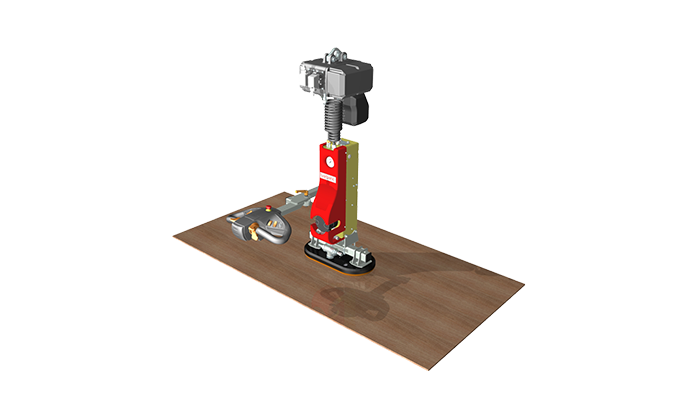
Vacuum Lifters (UniWood)
UniWood UWL 1S Barbaric
- ·Compact single suction cup without tipping
Special Lifters
5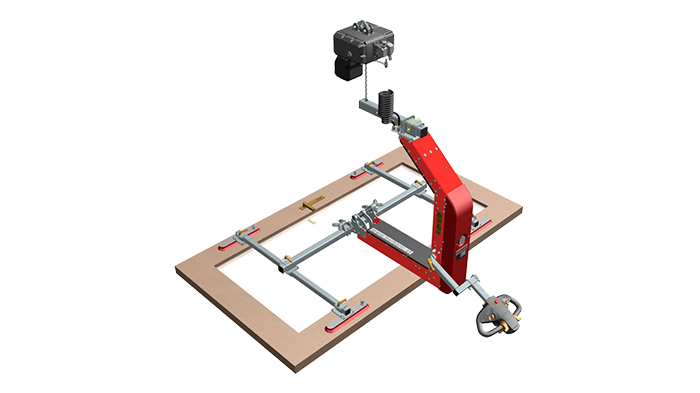
Special Lifters
UniWood UWL 5 Barbaric
- ·Special lifter for door leaves with 180° tipping
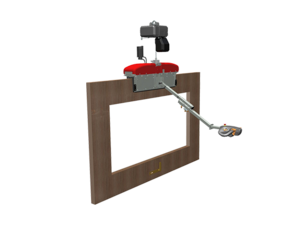
Special Lifters
SWL gripLifter Barbaric
- ·Unique gripping system for framed workpieces
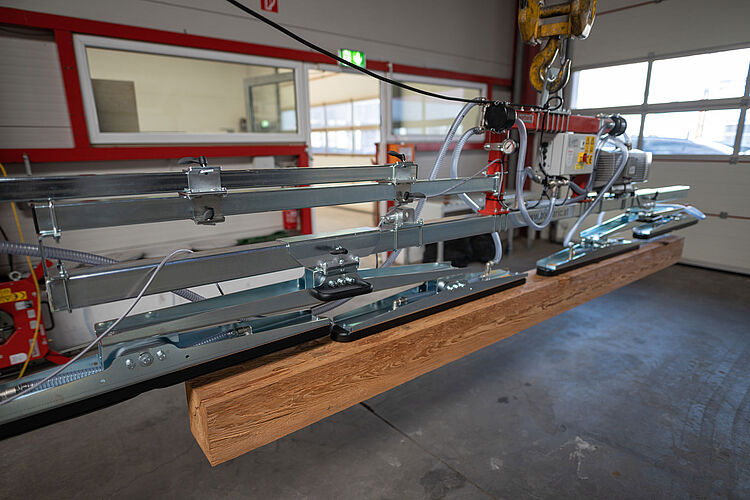
Special Lifters
SWL plankLifter Barbaric
- ·Sawn timber lifter up to 1500 kg – wireless remote optional
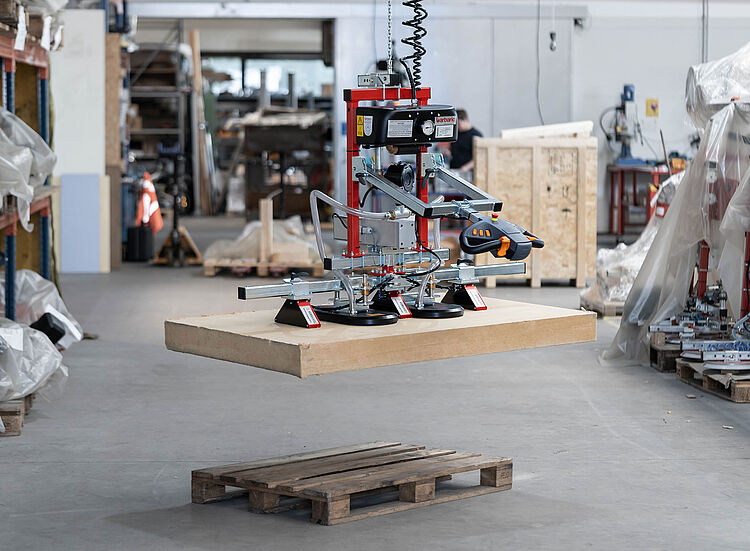
Special Lifters
NGR NeedleGripper Barbaric
- ·Needle gripper for wood-fibre & lightweight materials
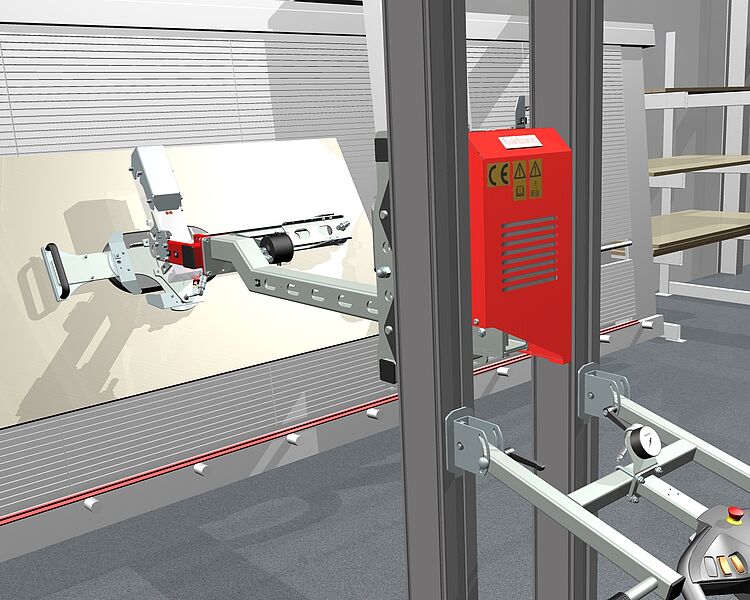
Special Lifters
RWL rackLifter Barbaric
- ·Rack vacuum lifter with 360° rotating mast
Special Traverses
3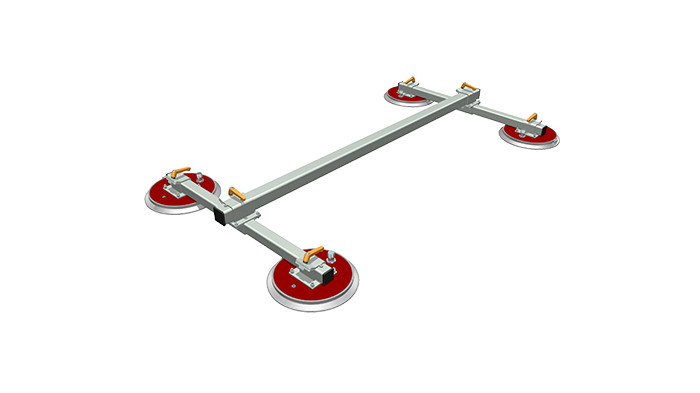
Special Traverses
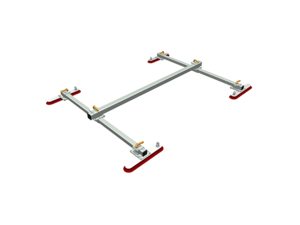
Dünnplattentraverse Barbaric
- ·Traverse for thin panels – PVC, aluminium, melamine
Special Traverses
Türentraverse Barbaric
- ·Traverse for doors with glass cutouts
Special Traverses
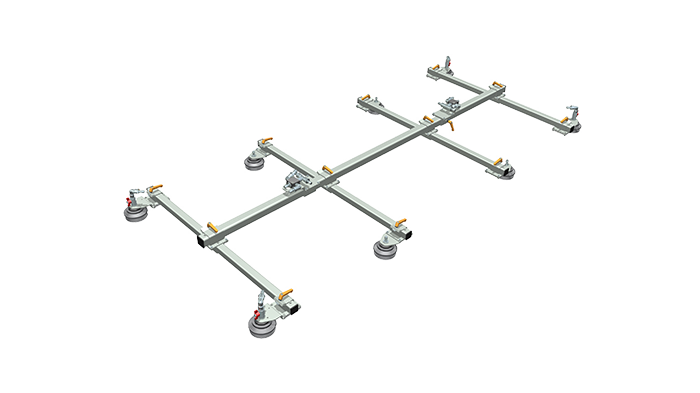
Traverse für Blech & Plexiglas Barbaric
- ·Traverse for sheet metal & Plexiglas with 8 bellows suction cups
Crane & Rail Systems
4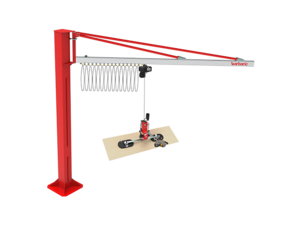
Crane & Rail Systems
SSK Säulenschwenkkran Barbaric
- ·Lightweight jib crane – individually configurable
Crane & Rail Systems
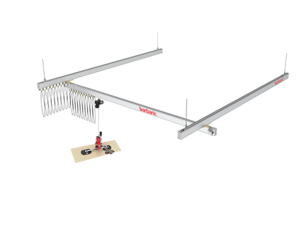
SSY Leichtlauf-Schienensystem Barbaric
- ·Rail system with steel bridges – manually movable
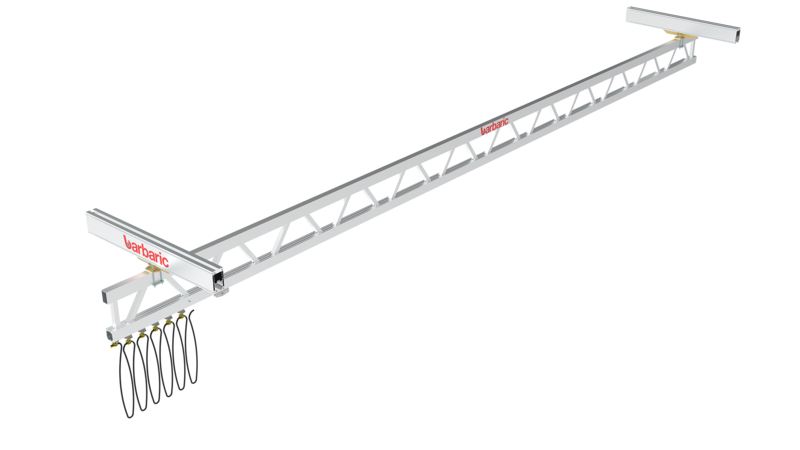
Crane & Rail Systems
2D Alu-Fachwerksbrücke Barbaric
- ·Aluminium truss bridge in 2D design
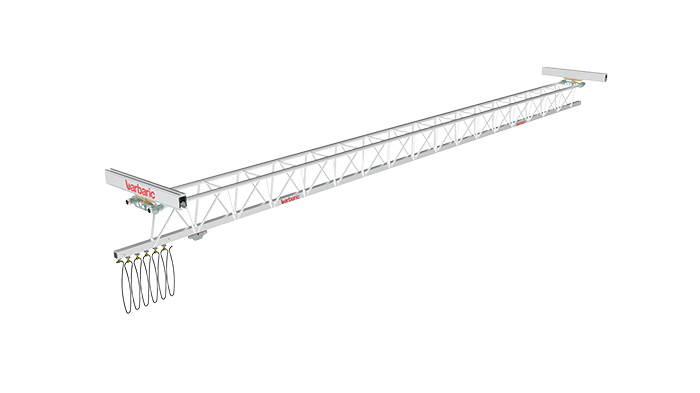
Crane & Rail Systems
3D Alu-Fachwerksbrücke Barbaric
- ·Aluminium truss bridge in 3D design – higher load capacity
Barbaric panel storage systems automate panel storage in wood and furniture industries. The principle: instead of stacking, searching and carrying panels manually, a ceiling-mounted crane with vacuum suction cups takes over the entire material flow. Panels are stored chaotically or by type, digitally managed and delivered just-in-time to panel saws or CNC machining centres. This saves labour, reduces panel damage and increases material utilisation. For joinery shops with limited budget, the CSF Professional is the compact entry solution, the CSF Industrial serves high-performance operations with cycle times below one minute, and the CSF Multilevel offers multi-storey capacities. Asamer plans and supplies Barbaric panel storage for Czech Republic, Slovakia and Hungary — from layout design through ERP integration to commissioning and maintenance contract. Economic analysis shows: at medium to large panel volumes, the system typically pays off in 12 to 24 months.
Chaotic vs. sorted storage
Chaotic storage uses floor space up to 30 % better than sorted stacks: every panel receives a digital slot during storage, independent of décor or article number. On retrieval, the desired panel is retrieved specifically via the management system — no search or re-stacking necessary.
ERP integration and material flow
Barbaric panel storage integrates seamlessly with SAP, Navision, proAlpha or custom ERP systems via OPC-UA, REST API or XML exchange. Order backlog from the ERP automatically controls material provision; the saw or CNC gets exactly the right panel at the right time.
Which CSF model fits?
CSF Professional: compact, economical, for joinery shops and mid-sized operations. CSF Industrial: high-performance, ERP-integrated, for industrial continuous operations. CSF Multilevel: multi-storey, for very large inventories on limited floor space. Sonderanwendungen: individual designs for special materials or layouts.
FAQ
Barbaric feeding systems automatically supply panel saws with the correct panel material at the right time. Instead of an operator manually carrying and loading every panel, the feeding system takes over this task — usually in combination with a panel storage and ERP-controlled order management. This saves personnel at the saw table, prevents material mix-ups and increases net saw throughput. For industrial cutting operations seeking maximum saw utilisation, Barbaric feeding systems are key technology. Asamer plans integration into existing or new installations for Czech Republic, Slovakia and Hungary — coordinated with saws from Mayer, Holzma, Schelling or other manufacturers.
Combination with panel storage
Feeding systems work most economically in combination with a Barbaric panel storage (CSF series). The storage holds the panel inventory; the feeding system handles sorted transfer to the saw. With ERP integration, the saw operator only performs visual inspection and reject sorting as manual tasks.
Throughput gain through automatic feeding
Manual loading of a panel saw takes 30–90 seconds depending on panel format — time during which the saw is idle. With a feeding system, this time shortens to a few seconds; net throughput typically increases by 15–30 %. In two-shift operation, the throughput gain quickly shows up in hundreds of euros per day.
FAQ
Barbaric nesting pickers automatically retrieve finished cut parts from the nesting CNC, sort them and stack them by order. This makes the nesting cell fully automatic: the CNC cuts the panel material into all required parts, the nesting picker lifts them off and assigns them to the correct order. The advantage: no manual part removal, no sorting errors, shorter CNC downtimes. The LCV Performance is the Barbaric standard model for furniture manufacturers; the NST nesting picker is the compact solution. Asamer integrates Barbaric nesting pickers for CZ, SK and HU into existing installations from Homag, Biesse, SCM or other nesting manufacturers — including software integration and camera programming.
Nesting picker vs. manual part removal
Manual part removal from the nesting CNC costs 2–5 minutes per panel cycle — plus sorting errors. A nesting picker handles the task in seconds, sorts error-free and relieves the operator for preparation tasks. Payback is typically 1.5 to 2.5 years.
Camera system and CNC data exchange
Barbaric nesting pickers detect parts in two ways: via camera system (image processing recognises contour and position) or via direct data exchange from the nesting CNC (part numbers and coordinates). Asamer coordinates the right method individually with your nesting software.
FAQ
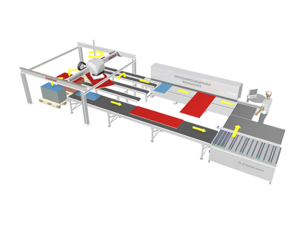
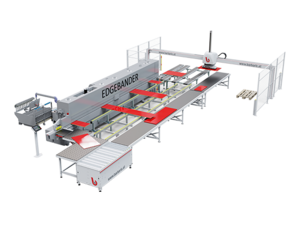
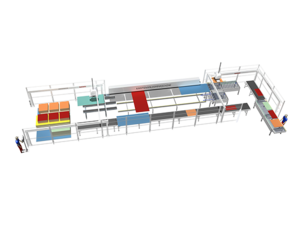
Barbaric return systems (RTS) automatically transport finished workpieces back to the machine operator. Typical application: edgebanding machines where the operator would otherwise need to carry the workpiece around the machine after each pass. With the RTS, a conveyor takes over this task — the operator can handle input and output from the same position, enabling one-man operation and freeing personnel resources for other tasks. RTS Compact is the space-saving entry solution, RTS Professional the proven joinery standard, RTS Industrial the high-performance variant for continuous operation. Asamer plans, delivers and installs Barbaric return systems for edgebanders of all manufacturers — OTT, Homag, Felder, Biesse, SCM — in CZ, SK and HU.
When does an RTS pay off?
From medium daily throughput of 100–200 parts, the RTS pays off in 12–24 months through personnel relief. Crucial: the freed employee must take on a productive follow-up task, not just stand idle.
RTS Compact vs. Professional vs. Industrial
RTS Compact (space-saving, entry) — RTS Professional (medium throughput, flexible) — RTS Industrial (high-performance, continuous). Teilehandling systems supplement the RTS with turning, flipping or stacking.
FAQ
Barbaric buffer conveyors (TMP) decouple consecutive processing stations and enable continuous material flow even with different cycle times. Between panel saw and edgebander, between nesting CNC and paint line or between assembly cells, a TMP buffer conveyor ensures that downstream stations don't wait for supply — and upstream stations aren't blocked by full belts. For furniture manufacturers and cutting operations, the TMP is key technology for production stability. Asamer plans buffer conveyors for customers in CZ, SK and HU as an integral part of continuous production lines.
When do you need a buffer conveyor?
As soon as two processing stations have different cycle times, downtimes occur: the faster station waits, the slower one backs up. A TMP buffers workpieces between stations and lets both work at their own pace.
FAQ
Barbaric handling systems for doors (DRX, CSF Industrial Türen, LPS) automate the special handling of residential, room and industrial doors in production. Doors are large, heavy and delicate workpieces: surfaces must not scratch, fittings must be precisely recessed, edges must be cleanly processed. Barbaric offers both vacuum handling (DRX for individual doors) and fully automatic storage systems (CSF Industrial Türen) and labelling solutions (LPS). For door manufacturers and furniture factories producing doors in series, these systems are the most economical solution for process reliability. Asamer supplies door handling systems for CZ, SK and HU including layout planning.
Vacuum handling for individual doors
The DRX vacuum lifter handles individual doors safely and gently on the surface. Ideal for joinery shops or smaller door manufacturers who don't need a fully automated line but want to avoid manual lifting.
Automatic door storage
The CSF Industrial for doors is a fully automatic storage specifically for door elements with automatic storage and retrieval, picking and ERP integration. Essential for door manufacturers with batch-size-1 production.
FAQ
Barbaric labelling systems (LPS) automatically apply barcodes, QR codes or RFID tags to workpieces — for seamless traceability and error-free order assignment. In furniture and door production, digital labelling is the key to batch-size-1 production: every part receives a unique ID that is preserved through all processing stations and linked to the ERP order. Asamer integrates LPS systems into production lines for CZ, SK and HU — both as a standalone station and as part of comprehensive automation projects.
Why digital labelling?
Manual labelling is time-consuming and error-prone. In batch-size-1 production with many different parts, mix-ups are practically unavoidable. Automatic labelling eliminates this error factor completely.
FAQ
Barbaric vacuum lifters (UWL series) enable ergonomic, safe and precise handling of large and heavy panels, doors or worktops. Instead of lifting by hand — which can cause back problems, panel damage and scratches on coated surfaces — the workpiece is lifted contact-free via vacuum, positioned floating and set down in a controlled manner. The UWL series covers all typical applications: UWL-3 as standard, UWL-3S for thinner panels, UWL-3J for faster cycles, UWL-1 as entry, UWL-5 for heavy loads. Asamer supplies, services and certifies Barbaric vacuum lifters for CZ, SK and HU — including annual safety inspection.
Ergonomics and occupational safety
Back strain from repetitive lifting is one of the most common reasons for work absence in the wood industry. Vacuum lifters completely remove this risk factor and make work accessible to older employees or women.
Which UWL is the right one?
UWL-1: entry, smaller loads. UWL-3: standard model for most wood applications. UWL-3S: special version for thin or porous panels. UWL-3J: faster cycle times. UWL-5: heavy-duty variant up to large doors and panels.
FAQ
Barbaric special vacuum lifters (SWL series, NGR) come into play when standard suction cups are not sufficient: specialised gripping techniques exist for planks (Plank-Lifter), sensitive surfaces (needle gripper), long profiles or non-flat workpieces. SWL Grip-Lifters combine vacuum with mechanical gripping for difficult geometries; NGR needle grippers penetrate porous materials like insulation panels; RWL Rack-Lifters lift parts from racks. For furniture factories, panel finishers and special manufacturing, these special tools are the only way to automate certain handling tasks. Asamer designs special vacuum technology for CZ, SK and HU individually.
When is special vacuum technology worthwhile?
As soon as standard vacuum technology fails due to workpiece geometry or surface — such as curved surfaces, extremely thin panels, porous material or complex shapes — special vacuum lifters are the solution. Asamer clarifies feasibility during pre-planning.
FAQ
Barbaric vacuum traverses are long gripper systems for handling large-format, long or lightweight workpieces — such as thin panels, doors, sheet metal or Plexiglas. The traverse distributes suction cups across the entire workpiece area and provides stable, low-warp handling even for flexible material. Typical models: thin panel traverse for thin chipboard or MDF, door traverse for door elements, and sheet-metal-Plexiglas traverse for metal or plastic panels. For materials that would sag or break during conventional lifting, traverses are indispensable. Asamer supplies vacuum traverses for CZ, SK and HU including safety acceptance.
Thin panel traverse vs. standard lifter
Thin panels (< 10 mm) sag during classic centre-grip lifting and tear at the edges. A thin panel traverse distributes the load across the entire surface so the panel remains planar. A must in fine furniture or acoustic panel production.
FAQ
Barbaric vacuum cranes are the stationary or area-covering handling systems when regular panel movements over defined paths are required — but without a fully automatic panel storage. They range from column slewing cranes (SSK) through rail systems (SSY) to truss bridges (2D and 3D) for large hall areas. The common principle: a crane travels or slews over the work area, picks up loads via vacuum and sets them down precisely — controlled by the operator or automatically via PLC. For joinery shops, warehousing operations and production lines with heavy workpieces, vacuum cranes are an economical handling solution. Asamer plans the right crane class depending on layout and operational profile for customers in CZ, SK and HU.
SSK vs. SSY vs. truss bridge
SSK column slewing crane: fixed position, semi-circle coverage — ideal for a single workstation. SSY rail system: linear path — ideal for lines or pass-through storage. Truss bridge 2D: rectangular area coverage — for medium halls. Truss bridge 3D: additional Z-axis — for multi-level movements.
FAQ
Products and specifications · barbaric.at
Interested in BARBARIC automation?