Cookie settings
We use cookies to run the website securely and activate optional features like analytics and marketing only with your consent. Learn more
All BARBARIC products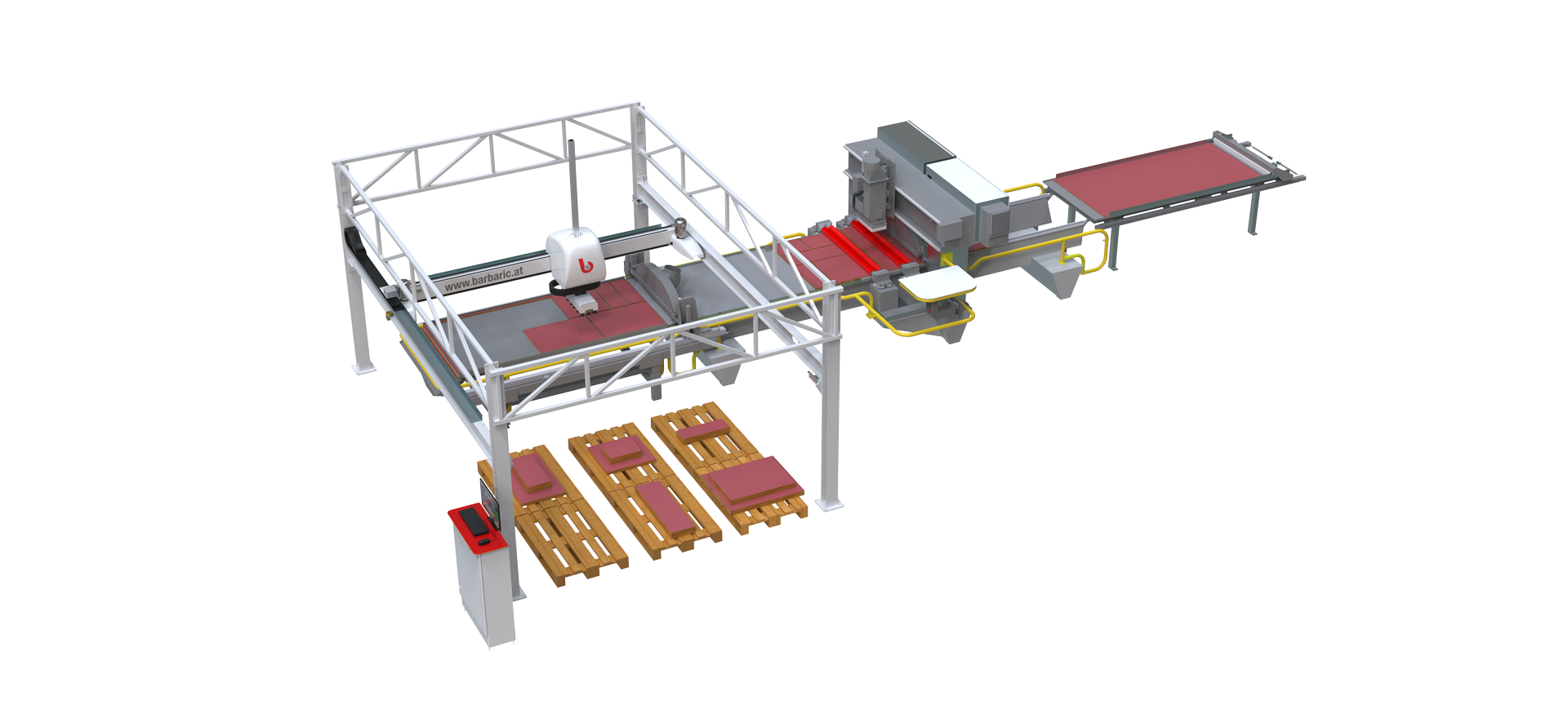
Nesting Picker
NST Barbaric
Fully automatic destacking after nesting processing
BARBARIC NST is a nesting picker for automatic removal and sorting of CNC finished parts. Asamer delivers, installs and services BARBARIC systems in CZ, SK and HU.
The NST Nesting Picker uses camera-based detection for position and orientation of each part after nesting processing. Automatic sorting, stacking and disposal of offcuts into collection bins – controlled by matching nesting plan data with real-time position analysis.
Send inquiryHighlights
- Camera-based detection of part position and orientation after nesting
- Automatic sorting and stacking of finished parts
- Automatic disposal of offcuts into collection bins
- Matches nesting plan data with real-time position analysis
- Saves valuable working time and increases nesting machine productivity
Specifications
11- Max. load capacity
- 60 kg
- Min. panel size
- 80 × 300 mm
- Max. panel size
- 2,800 × 1,300 mm
- Panel thickness
- 8–60 mm
- Throughput
- up to 10 parts/min
- Lift drive
- Electric motor
- Rotation drive
- Electric motor
- Operating pressure
- 6 bar
- Voltage
- 400 V / 50 Hz
- Total power
- 5 kW
- Air consumption
- 420 Nl/min
Software integration
BARBARIC systems like the NST feature open interfaces to machine manufacturers. Our software team extends this to your ERP or production system.
Learn moreIn Detail
The Barbaric NST nesting picker is a compact automation solution for part removal from nesting CNCs. It targets joinery shops and smaller furniture operations that already work with nesting but do not want to invest in a larger LCV Performance. The NST picks finished cut parts directly from the CNC nesting panel, separates them and places them on a stacking or buffer area. The compact footprint fits next to practically any nesting CNC — even in halls with limited space. Vacuum suction, camera system and CNC data coupling are identical to the larger nesting picker; only throughput is lower. Asamer offers the NST as entry-level automation for nesting cells in CZ, SK and HU including connection to your existing CNC.
Applications
For joinery shops starting with automation
Anyone automating part removal from a nesting CNC for the first time starts best with the NST. The investment is manageable, integration is straightforward — and the learning curve for operators is short. As throughput grows, an upgrade to LCV Performance is possible later.
For limited hall footprints
In small or already crowded halls, the NST is often the only feasible nesting automation. The footprint is significantly smaller than the LCV Performance; an L-shape arrangement next to the CNC is possible in most operations without rebuild.
Buying Guide
The NST is the economical choice if you still unload your nesting CNC manually and operate with daily output below 200 nesting cycles. At higher throughput or multi-shift operation, the LCV Performance is the better long-term investment. Asamer advises which system suits your production size.
FAQ
Interested?
We work with you to plan the optimal solution for your production.